Finding consistent, high-quality customers is the hardest part of running a home improvement business. Most contractors don’t struggle with skill or execution—they struggle with predictable workflow.
That’s where exclusive home improvement leads come in.
In simple terms, they give contractors direct access to homeowners who are actively looking for services like roofing, remodeling, HVAC, or repairs—without competing with multiple businesses for the same contact.
Definition (Featured Snippet Style):
Exclusive home improvement leads are homeowner inquiries that are sold or delivered to only one contractor. These leads are typically pre-qualified based on intent, location, and service need, increasing conversion rates compared to shared leads.
Instead of chasing cold prospects, contractors receive inbound requests that already show purchase intent. This shifts the business model from “finding clients” to “responding to ready buyers.”
What Are Exclusive Home Improvement Leads?
Exclusive leads are generated when a homeowner submits a request for a service, and that request is assigned to a single contractor. Unlike shared leads, where multiple businesses contact the same person, exclusive leads reduce competition and improve response effectiveness.
These leads often include:
- Verified homeowner contact details
- Service category (roofing, plumbing, etc.)
- Location or zip-code targeting
- Project timeline (urgent, soon, planning stage)
- Budget indicators in some systems
The goal is simple: connect the right homeowner with the right contractor at the right time.
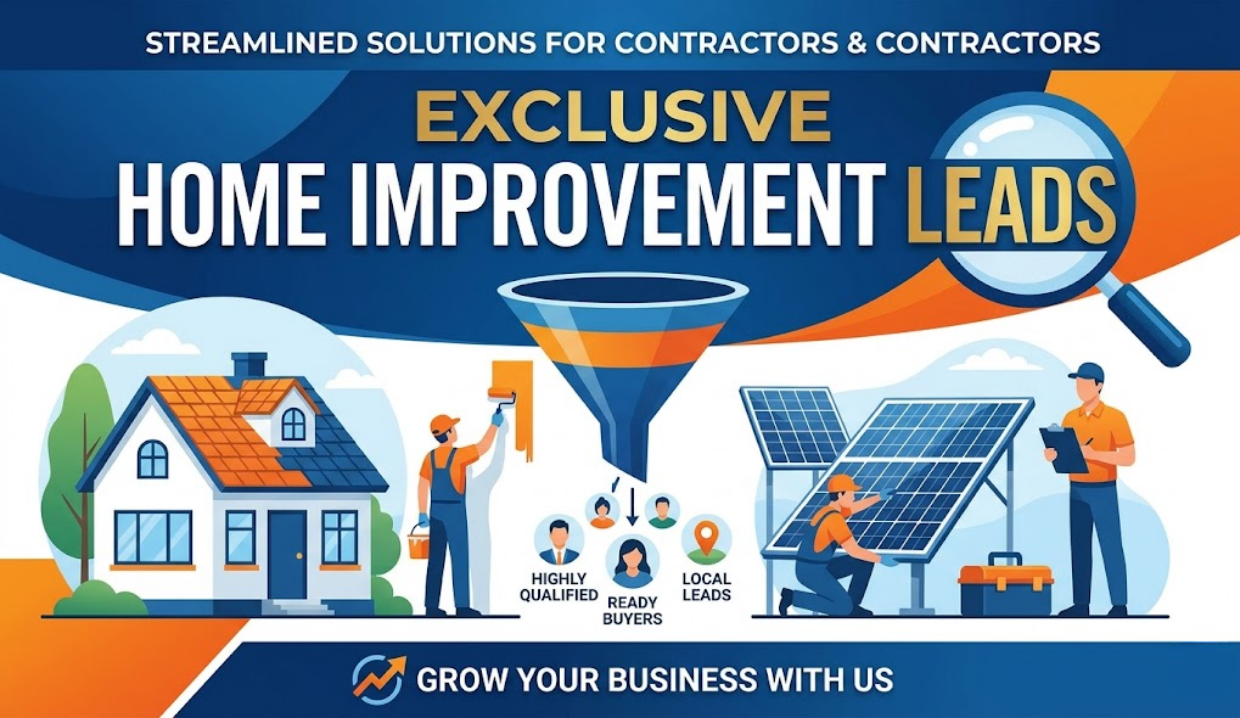
In many cases, these leads are generated through lead generation funnel for home services, where traffic is captured through ads, SEO pages, or directories and then filtered using intent signals.
How Exclusive Lead Generation Works
Behind every lead is a structured system designed to filter, qualify, and deliver high-intent inquiries.
Step 1: Traffic Acquisition
Homeowners find service pages through:
- Paid ads (Google Ads or PPC campaigns)
- Organic search (local SEO)
- Marketplace platforms
Step 2: Intent Capture
Users submit forms or calls requesting services. This is where inbound home improvement inquiries are created.
Step 3: Lead Qualification
Systems analyze:
- Service urgency
- Project type
- Budget signals
- Location match
This is often powered by AI lead scoring models that filter low-quality submissions.
Step 4: Distribution
Once verified, the lead is assigned exclusively to one contractor based on:
- Geo-targeting rules
- Service category match
- Availability
This is known as a real-time lead distribution system.
Types of Home Improvement Leads by Service
Not all leads are equal. Different niches behave differently in terms of urgency, cost, and conversion rate.
Roofing Leads
Often triggered by storm damage or urgent repair needs. These are high-value due to insurance involvement and urgency.
HVAC Leads
Seasonal demand plays a major role. Emergency breakdowns often create fast conversion opportunities.
Remodeling Leads
These include kitchen and bathroom renovation projects, typically higher budget and longer decision cycles.
Plumbing & Repair Leads
Usually urgent, driven by immediate problems like leaks or blockages.
Solar Installation Leads
Often influenced by incentives, financing options, and long-term savings interest.
Exclusive vs Shared Leads: Key Differences
Understanding this distinction is critical for contractors evaluating lead providers.
| Feature | Exclusive Leads | Shared Leads |
|---|---|---|
| Competition | None | Multiple contractors |
| Cost | Higher | Lower |
| Conversion Rate | Higher | Lower |
| Response Pressure | Moderate | Very high |
| ROI Potential | Strong | Variable |
Exclusive leads perform better because contractors are not competing for attention at the same time.
Lead Qualification and Scoring Systems
Modern lead generation relies heavily on data filtering.
Intent-Based Scoring Models
These models evaluate how likely a homeowner is to convert based on behavior and input data.
Budget Indicators
Some systems identify whether a homeowner is:
- Budget-ready
- Researching
- Not ready yet
Behavioral Signals
Examples include:
- Time spent on page
- Number of form fields completed
- Repeat visits
These inputs help identify purchase-ready renovation leads.
Also read: How to Choose the Best Kitchen Remodeling Contractor TN Guide
Geo-Targeting and Exclusivity Models
Geo-targeting ensures leads are relevant to contractor service areas.
Advanced systems use:
- Zip-code level targeting
- Neighborhood segmentation
- Micro-local radius filters
This leads to exclusive construction leads by zip code, ensuring contractors only receive relevant opportunities.
A growing trend is micro-geo exclusive contractor leads, which narrow targeting to extremely small service zones for higher conversion accuracy.
Best Channels for Generating Exclusive Leads
Google Local Services Ads (LSA)
One of the strongest channels for home service providers. It focuses on verified businesses and pay-per-lead structure.
PPC Campaigns
Paid ads targeting keywords like “emergency plumber near me” or “roof repair today” generate fast results.
SEO for Local Services
Long-term strategy focusing on organic rankings for service-based keywords.
Lead Marketplaces
Platforms that connect homeowners with contractors using lead marketplace platforms and filtering systems.
Referral and Partner Networks
Often overlooked but highly effective for consistent inbound work.
Cost and ROI of Exclusive Leads
Exclusive leads are more expensive than shared ones, but the return is usually higher.
CPL Benchmarks
- Roofing: Higher cost per lead, strong conversion potential
- HVAC: Medium cost, seasonal spikes
- Plumbing: Moderate cost, high urgency
- Remodeling: Higher value per job
The real metric that matters is not cost per lead, but cost per acquired customer.
Common Problems with Lead Quality
Even exclusive systems are not perfect.
Fake or Duplicate Leads
Occasionally submitted multiple times or generated through low-quality traffic sources.
Slow Response Issues
A delay in follow-up drastically reduces conversion chances.
Poor Target Matching
Leads may not always align perfectly with contractor specialties.
Low-Intent Users
Some users are still researching, not ready to hire.
This is why AI-filtered no-spam contractor leads are becoming more important in modern systems.
How to Maximize Conversion from Exclusive Leads
Getting the lead is only half the job.
Speed-to-Lead Strategy
Responding within minutes significantly increases conversion rates.
CRM Automation
Using systems like CRM automation for contractors helps track, follow up, and manage leads efficiently.
Follow-Up Sequences
Multiple contact attempts improve closing rates:
- Call within 5 minutes
- Text follow-up
- Email reminder
- Second-day follow-up
Appointment Setting Models
Some contractors use appointment-setting services to pre-book consultations instead of handling raw inquiries.
Advanced Strategies for Scaling Lead Flow
Hyper-Local Targeting
Focusing on narrow geographic zones increases relevance and reduces wasted spend.
AI Lead Prediction
Predicting when homeowners are likely to need services based on behavior patterns.
Seasonal Demand Planning
Understanding cycles like:
- Summer HVAC demand
- Winter heating repairs
- Post-storm roofing spikes
This helps align budget and capacity.
Behavioral Retargeting
Users who previously visited service pages are re-engaged through ads.
This creates behavioral retargeting home service leads with higher conversion probability.
Hidden Opportunities Most Competitors Miss
The most valuable leads are often not obvious.
Examples include:
- Insurance-approved repair leads (storm or fire damage cases)
- Same-day contractor booking requests
- Pre-financed home improvement leads
- Emergency repair leads within short response windows
- Abandoned inquiry follow-ups
These categories often fall under high-intent “same day contractor booking” leads, which convert at significantly higher rates.
Another emerging trend is voice-search-generated home service leads, driven by smart devices and mobile assistants.
Future of Exclusive Home Improvement Leads
The industry is moving toward automation and prediction.
We are seeing:
- AI-driven lead marketplaces
- Real-time homeowner intent scoring
- Predictive demand heatmaps
- Instant booking systems
- Smart routing of leads based on contractor performance
The next stage of growth will focus on zero-waste lead distribution systems, where every inquiry is matched with the most suitable contractor instantly.
FAQS: exclusive home improvement leads
What are exclusive home improvement leads?
They are homeowner inquiries assigned to a single contractor, reducing competition and improving conversion potential.
Are exclusive contractor leads worth it?
Yes, because they typically convert at higher rates and reduce wasted sales effort compared to shared leads.
How do contractors get exclusive leads?
Through PPC campaigns, SEO, Google Local Services Ads, and lead generation platforms.
What makes a lead high-quality?
Strong intent signals like urgency, budget readiness, and accurate service matching.
Can small contractors compete?
Yes, especially when targeting zero-competition lead territories for contractors or niche local zones.
Conclusion
Exclusive home improvement leads are not just about buying inquiries—they are about building a predictable pipeline of high-intent homeowners who are ready to hire.
When combined with strong qualification systems, fast response times, and localized targeting, they become one of the most powerful growth channels for contractors.
The future belongs to systems that can filter intent, predict demand, and deliver the right homeowner to the right contractor at the exact right moment.