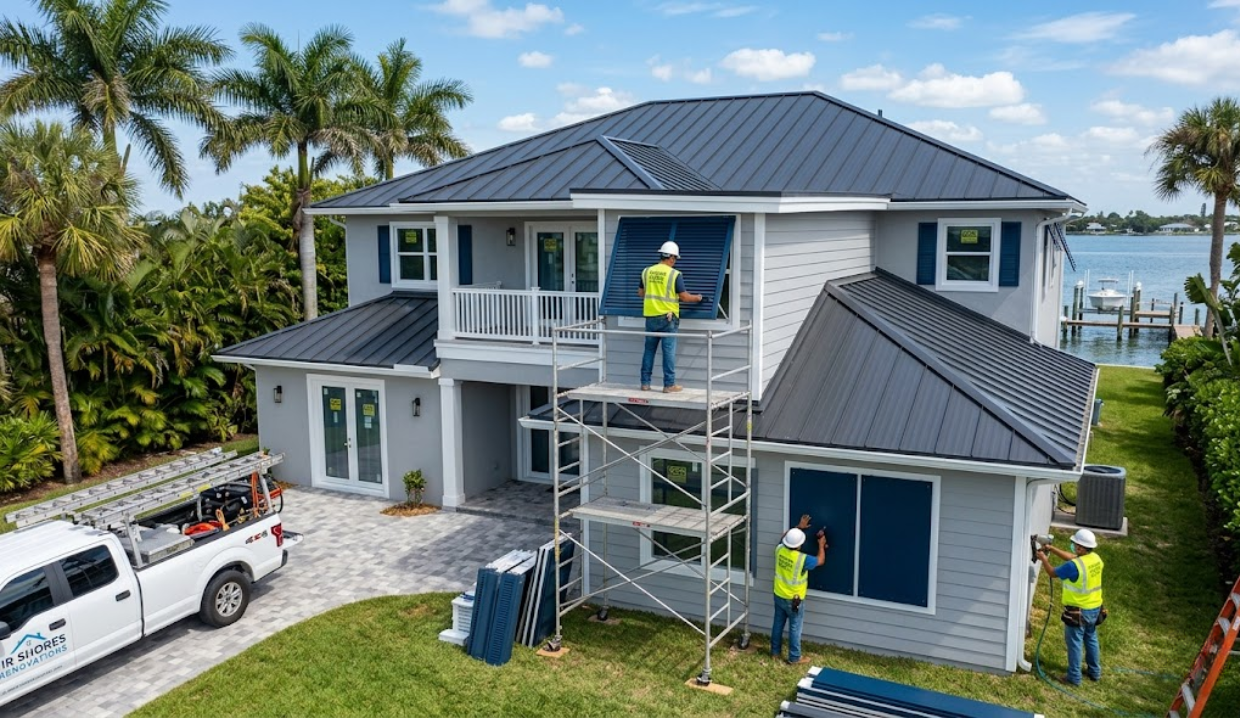
Living on the coast brings beautiful views and salty breezes, but it also brings serious storm risks. Homes in Indian River Shores are exposed to high winds, storm surge, flooding, and moisture intrusion. Exterior home renovation for storm protection in Indian River Shores isn’t just a design choice — it’s a resilience strategy that preserves safety, value, and peace of mind.
This in‑depth guide walks you from the basics to advanced strategies, explains the regulations that matter, and offers practical frameworks for strengthening your home’s exterior against coastal storms.
Why Exterior Storm Protection Matters in Indian River Shores
Storms on Florida’s east coast can bring:
- Hurricane‑force winds that uplift roofs and damage walls
- Storm surge and flooding that erode foundations
- Wind‑driven rain that infiltrates weak points
- Salt corrosion that degrades exterior materials
When you invest in exterior storm hardening renovations, you reduce risk and improve long‑term performance. This isn’t cosmetic — it’s structural and protective.
Understanding the Coastal Risk Profile
Before upgrading exterior systems, it helps to grasp the local environmental pressures.
Wind Loads and Uplift
Coastal homes must be designed to resist wind‑load rated forces measured by engineering standards like ASCE 7. Wind can exert upward and lateral pressure that separates roofing and walls from the structure.
Flooding and Storm Surge
Storm surge can raise water levels quickly. Exterior surfaces and openings that aren’t designed for water resistance allow floodwater to enter.
Moisture and Corrosion
Salt‑laden air accelerates corrosion in metal fasteners, claddings, and gutters. Moisture intrusion weakens wood framing and insulation.
Regulatory Framework: What You Must Know
Exterior renovations in Indian River Shores aren’t arbitrary. They must align with applicable codes and requirements.
Florida Building Code (FBC)
The Florida Building Code sets standards for wind resistance, moisture control, and structural continuity. Exterior renovations must satisfy FBC criteria for:
- Wind‑resistant cladding and roofing
- Impact‑rated openings
- Structural tie‑downs
- Corrosion resistance in coastal zones
Local Permitting
Indian River Shores has specific coastal construction rules. Before beginning a project, verify:
- Permit requirements
- Setback and elevation standards
- Approved product lists (e.g., Miami‑Dade TAS certifications)
Also read: How Can You Achieve the Best Mobile Home Kitchen Renovation
The Core Principles of Storm‑Resilient Exterior Design
Exterior resilience isn’t a single upgrade — it’s an integrated system. Each part must work together.
Continuous Exterior Envelope
A storm‑resistant exterior starts with continuity:
- Air and water barrier systems that wrap the home
- Flashing and sealants at roof edges and openings
- Overlap and lapping techniques that leave no gaps
This envelope minimizes wind uplift and prevents water intrusion.
Structural Uplift Resistance
Elements like roof decking, walls, and eaves must resist uplift. Reinforcing these components with engineered fasteners and hardware increases performance during high winds.
Key Exterior Renovation Upgrades
Here’s a breakdown of the most effective upgrades for storm protection.
Roofing Systems
The roof is the first line of defense.
Roof Deck Fastening
Securing the roof deck with hurricane clips and enhanced fasteners prevents separation during high winds.
Secondary Water Barriers
These membranes sit beneath roofing materials and catch wind‑driven rain that gets past the shingles.
Edge Reinforcement
Ridges, hips, and eaves need specialized tie‑downs to prevent uplift.
Exterior Walls and Cladding
The wall system resists wind pressure and weather intrusion.
Impact‑Resistant Cladding
Materials tested for impact and wind pressure help shield the structure and reduce repairs.
Corrosion‑Resistant Components
In coastal zones, use fasteners and coatings that resist rust and deterioration.
Shear Wall Strengthening
Reinforcing shear walls improves the entire structure’s ability to transfer wind loads to the foundation.
Windows, Doors, and Openings
Openings are weak points unless properly fortified.
Impact‑Resistant Products
Certified impact‑resistant windows and doors reduce the risk of breakage and water entry.
Storm Shutters
Bahama, roll‑down, and colonial shutters add an extra layer of protection when hurricanes approach.
Flashing and Sealing
Well‑installed flashing and weather seals prevent wind‑driven rain from entering around frames.
Foundation and Exterior Grading
Storm resilience begins below the siding.
Elevated Foundation Strategies
If your home sits in a flood zone, raising exterior elements above expected water levels can reduce damage.
Exterior Grading for Water Diversion
Sloping yard surfaces away from the house and adding hardscape swales divert water from foundations.
Gutters, Downspouts, and Drainage
Storm‑efficient water management prevents pooling and seepage.
Oversized Gutters
Larger gutters handle heavy storm runoff without overflowing.
Downspout Extensions
Direct runoff well away from the foundation to reduce pressure on exterior walls.
Retention Zones and Swales
These features slow down and disperse water on your property.
Landscaping and Ancillary Exterior Defense
While landscaping isn’t structural, proper design supports storm resilience.
Windbreak Plantings
Strategically placed trees and shrubs can reduce wind speed near the home.
Deck and Patio Anchoring
Outdoor features need anchoring systems that resist uplift and shear forces.
Practical Steps: How to Plan a Storm‑Resistant Exterior Renovation
Step 1: Conduct a Risk Assessment
Start by identifying vulnerabilities:
- Determine flood elevation levels
- Evaluate existing roof and wall integrity
- Check window and door ratings
- Assess corrosion in exterior materials
Step 2: Consult Structural and Code Experts
Work with a licensed engineer familiar with coastal standards. They can:
- Calculate wind loads
- Specify upgrade options
- Align plans with FBC
Step 3: Choose Compliant Materials
Look for certifications:
- Miami‑Dade TAS for impact products
- ASTM testing for corrosion and wind resistance
- ICC‑ES evaluation reports for compliance
Step 4: Secure Permits and Approvals
Submit plans to local authorities and obtain permits before construction begins.
Step 5: Hire Qualified Contractors
Storm‑focused exterior work requires experienced trades familiar with:
- Roof reinforcement
- Impact installation
- Drainage engineering
Step 6: Inspect and Test
After installation:
- Check seals around openings
- Ensure continuous barriers
- Test gutters and drainage flow
Cost, ROI, and Insurance Considerations
Exterior storm upgrades involve upfront costs, but they pay off.
Typical Cost Factors
- Materials (impact windows, reinforcement hardware)
- Labor complexity (roof or foundation work)
- Permitting and engineering fees
Insurance Credits
Many insurers offer storm retrofit credits when you demonstrate compliance with approved resilience measures. This can reduce premiums.
Long‑Term Value
Storm protection minimizes damage, repairs, and preserves market value. Homes built or renovated with resilience in mind tend to command higher resale prices.
Common Mistakes to Avoid
Even well‑intentioned renovations can fall short.
- Ignoring code compliance and permits
- Choosing low‑grade materials with no coastal rating
- Failing to integrate water management systems
- Upgrading walls or roof but ignoring drainage
A holistic approach ensures each component supports the others.
Case Studies: Real Lessons from Indian River Shores
Case Study 1: Roof Reinforcement Success
A homeowner replaced standard roof decking with wind-load-rated materials and hurricane clips. After a tropical storm, the roof remained intact, preventing costly water intrusion.
Case Study 2: Poor Grading Leads to Flood Damage
Another property had solid cladding and impact windows but lacked proper exterior grading. During heavy rain, water pooled against the foundation, leading to basement seepage. Correcting the grading afterward stopped future issues.
FAQS: Exterior Home Renovation for Storm Protection Indian River Shores
What exterior renovations improve storm protection in Indian River Shores?
Upgrades like impact‑resistant windows/doors, reinforced roofing, continuous water and air barriers, and improved drainage systems all strengthen storm resilience.
How much does a storm‑proof exterior upgrade cost?
Costs vary widely depending on home size, materials chosen, and engineering needs. Budgeting estimates help, but a professional assessment gives accurate pricing.
Do impact‑resistant materials reduce damage?
Yes — certified impact products significantly decrease the likelihood of breakage and water intrusion during high winds.
Are permits always required for these renovations?
Yes, most exterior storm protection work requires permitting to ensure compliance with the Florida Building Code and local rules.
Can landscaping help protect my home?
While not structural, well‑designed landscaping can slow wind and redirect water, supporting the broader storm defense strategy.
Conclusion: Strengthening Your Exterior for Coastal Challenges
Exterior home renovation for storm protection in Indian River Shores is an investment in safety and longevity. By understanding coastal risks, aligning with building codes, and integrating structural, moisture, and wind resistance into every surface, you significantly reduce vulnerability.
Approach renovation systematically:
- Assess risk
- Plan for code and environmental pressures
- Choose compliant, resilient materials
- Integrate water management
- Execute with experienced professionals
These measures not only protect your home but also enhance its long‑term performance and value. Coastal living comes with challenges — smart, storm‑ready exterior design ensures you can enjoy it with confidence.