Home renovation is no longer just about fixing walls, updating floors, or repainting rooms. It has evolved into a structured ecosystem of design, engineering, technology, and customer experience. Today’s homeowners expect speed, transparency, and long-term value—not just construction work.
This is where the idea of a home renovation products services unique value proposition becomes important. It defines how renovation companies combine services, materials, and systems to deliver measurable results like cost efficiency, faster timelines, and better property value.
To understand it deeply, you need to look beyond contractors and think in terms of complete service models, digital workflows, and outcome-based renovation systems.
What is a Home Renovation Value Proposition?
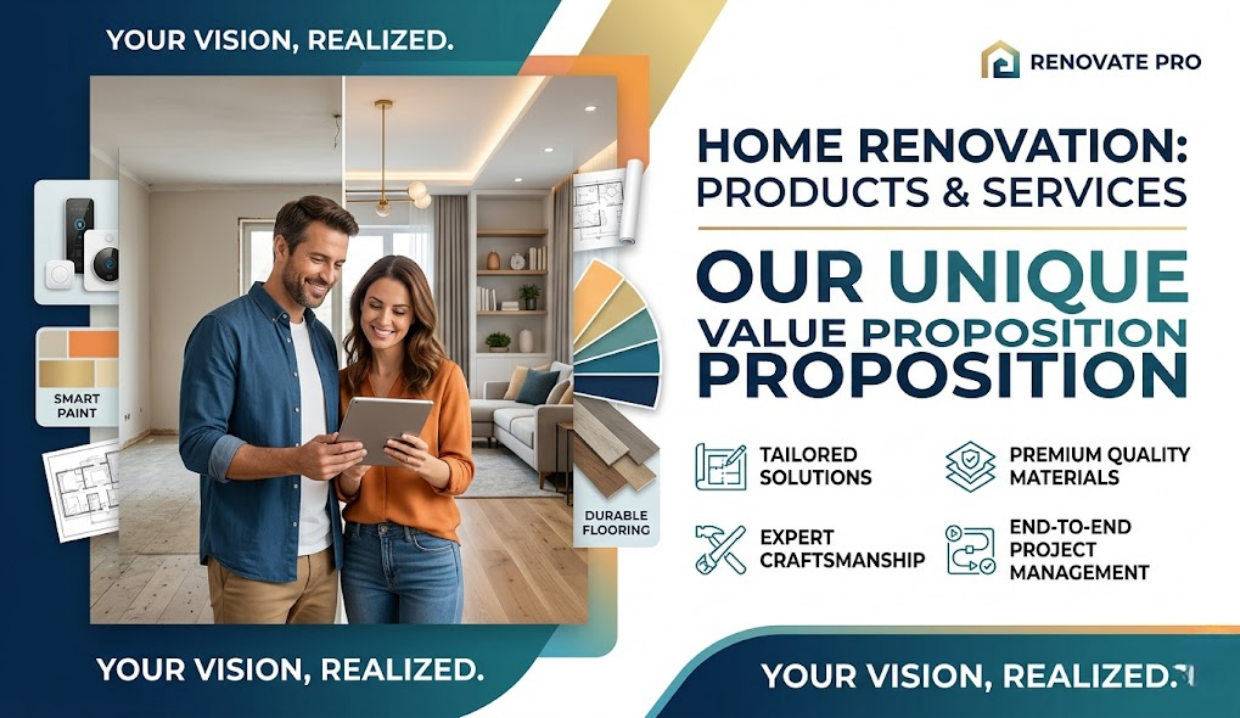
A home renovation value proposition is the clear promise a service provider makes to a customer about what they will receive in return for their investment. It includes pricing clarity, service quality, timelines, materials, and overall experience.
In simple terms:
A strong value proposition answers three questions:
- Why should a homeowner choose this service?
- What results will they get?
- How is it different from traditional contractors?
Modern providers often use design-build contractor model systems, where design and construction are handled under one integrated workflow instead of separate teams. This reduces delays, miscommunication, and cost overruns.
A strong value proposition usually includes:
- Fixed or predictable pricing
- End-to-end renovation execution
- Transparent project tracking
- Quality assurance systems
- Post-completion warranty support
Modern Home Renovation Service Models Explained
The renovation industry has shifted from fragmented services to unified systems. This transformation is driven by demand for efficiency and reliability.
Design-Build vs Traditional Contractor Approach
Traditional renovation involves multiple independent parties: architect, designer, contractor, and suppliers. This often leads to coordination gaps.
The design-build contractor model solves this by combining design and execution under one system. It improves:
- Communication flow
- Cost accuracy
- Project speed
- Accountability
This model is widely used in turnkey home remodeling solutions, where the provider delivers a fully completed home ready for use.
Also read: Is There Any Specific Approach Designed for Renovating Older Homes
Turnkey Renovation Lifecycle
A turnkey system is an end-to-end home improvement service where everything is handled from planning to final handover.
Steps typically include:
- Consultation and requirement mapping
- Design planning using CAD or BIM systems
- Material selection and procurement
- Construction and execution
- Quality control inspections
- Final delivery and walkthrough
This system reduces homeowner involvement and ensures consistency in execution.
Core Elements of a Strong Value Proposition in Renovation
A strong home renovation products services unique value proposition is built on measurable benefits rather than vague promises.
Fixed Pricing and Budget Transparency
One of the biggest pain points in renovation is unexpected cost escalation. Modern companies solve this with:
- Fixed-price home renovation models
- Pre-approved material lists
- Transparent cost breakdowns
This ensures homeowners know exactly what they are paying for.
Timeline Guarantees and Execution Systems
Delays are common in traditional construction. Advanced providers use:
- High-efficiency renovation workflows
- Digital scheduling systems
- Milestone-based tracking
This allows better control over delivery timelines and reduces uncertainty.
Quality Control and Warranty Models
Quality assurance is now a structured system rather than a final inspection. It includes:
- Stage-wise inspections
- Material testing
- Supervisor verification
- Post-handover warranty support
This builds trust and long-term reliability.
End-to-End Renovation Process Workflow
Modern renovation is structured like a production system rather than manual labor.
Planning and Consultation Phase
This phase includes:
- Space evaluation
- Budget alignment
- Requirement gathering
- Feasibility study
Here, companies often use value engineering process techniques to optimize cost without reducing quality.
Design and Visualization Stage
Tools like Computer-Aided Design (CAD) systems and Building Information Modeling (BIM) help create realistic 3D layouts.
This stage ensures:
- Accurate spatial planning
- Material selection clarity
- Design validation before execution
Execution and Construction Phase
This is where construction + design hybrid services come into play. Work includes:
- Structural renovation
- Interior remodeling
- Electrical and plumbing upgrades
- Finishing and detailing
Advanced systems also use subcontractor management systems to coordinate multiple teams efficiently.
Final Delivery and Handover
Before handover:
- Final inspections are completed
- Quality checks are verified
- Client walkthrough is conducted
A structured renovation project management service ensures nothing is missed.
Smart and Digital Transformation in Renovation
Technology is reshaping how renovation companies operate.
Real-Time Project Tracking Systems
Modern services now offer dashboards where clients can:
- Track progress updates
- View daily work logs
- Monitor timelines
This improves transparency and reduces stress.
AI-Based Cost Estimation and Planning
AI systems help predict:
- Material costs
- Labor estimates
- Project duration
This reduces planning errors and improves accuracy.
Smart Home Integration During Renovation
Many projects now include smart home integration renovation features such as:
- Automated lighting systems
- Security sensors
- Climate control systems
These upgrades improve convenience and long-term property value.
Sustainable and ROI-Focused Renovation Strategies
Modern homeowners are increasingly focused on long-term returns.
Energy-Efficient Renovation Systems
This includes:
- Insulation upgrades
- Energy-efficient windows
- HVAC optimization
These improvements reduce utility costs significantly.
Value Engineering in Home Remodeling
Value engineering process focuses on maximizing performance while minimizing cost. It ensures:
- Smart material selection
- Efficient structural design
- Reduced waste during construction
Property Value Optimization
A well-planned renovation can significantly increase resale value by:
- Modernizing interiors
- Improving layout functionality
- Enhancing curb appeal
Pricing Models and Financial Flexibility
Renovation companies now offer flexible pricing structures.
Fixed Price vs Dynamic Pricing
- Fixed price: predictable, stable, low-risk
- Dynamic pricing: flexible but may vary with changes
Most homeowners prefer budget-transparent renovation planning models due to reliability.
Financing Options
Many services now include:
- Installment plans
- Renovation loans
- Partner financing systems
This makes large-scale upgrades more accessible.
Common Problems and How Modern Systems Solve Them
Delays and Mismanagement
Solved using:
- High-efficiency renovation workflows
- Real-time tracking systems
Budget Overruns
Controlled through:
- Fixed-price agreements
- Material procurement systems
Lack of Transparency
Resolved by:
- Digital dashboards
- Milestone reporting
- Client communication systems
How to Choose the Right Renovation Service Provider
Selecting the right provider is critical for project success.
Key factors include:
- Experience in full-service interior remodeling
- Use of modern tools like BIM and CAD
- Transparent pricing systems
- Strong warranty policies
- Proven delivery timelines
Avoid providers without structured workflows or unclear pricing models.
Future of Home Renovation Services
The industry is moving toward highly digital and integrated systems.
Subscription-Based Home Improvement Models
Instead of one-time renovation, future systems may include:
- Ongoing upgrades
- Maintenance packages
- Periodic redesign services
AI-Driven Construction Ecosystems
Future renovation may rely heavily on:
Modular and Rapid Renovation Systems
Modular home renovation systems allow faster upgrades using pre-designed components. This reduces construction time and improves consistency.
FAQS: Home Renovation Products Services Unique Value Proposition
What is included in a full renovation service?
It includes design, planning, material sourcing, construction, finishing, and final delivery under one system.
Why is transparency important in renovation?
Because it prevents hidden costs, delays, and miscommunication between stakeholders.
How does technology improve renovation quality?
Through AI planning, digital tracking, and better design accuracy using BIM and CAD systems.
What makes a renovation service unique today?
A strong combination of speed, transparency, fixed pricing, and end-to-end execution defines modern uniqueness.
Conclusion
The modern renovation industry is no longer about isolated construction work. It is a structured ecosystem driven by technology, transparency, and customer-focused systems.
A strong home renovation products services unique value proposition is built on predictable pricing, integrated design-build systems, digital project tracking, and long-term value creation.
Homeowners today are not just looking for renovation—they are looking for complete transformation systems that deliver reliability, efficiency, and measurable results.