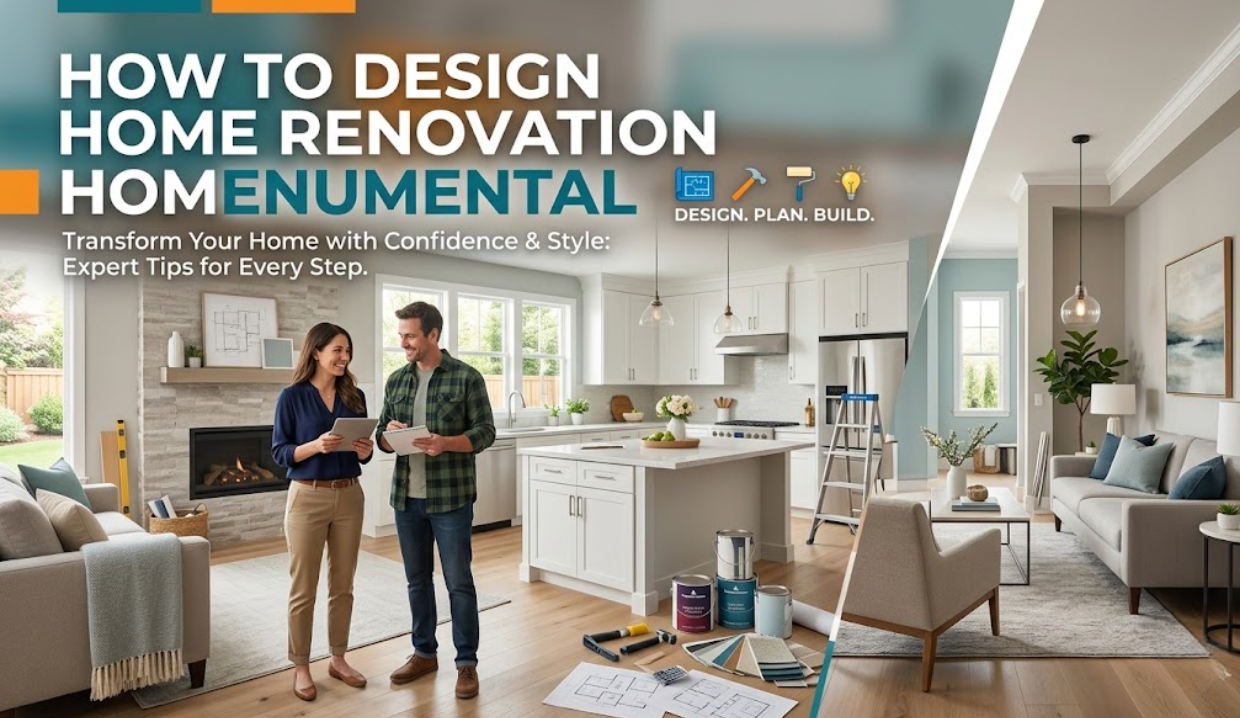
Designing a large-scale home renovation can feel overwhelming. Many homeowners jump straight into construction, only to face budget overruns, poor layouts, or structural issues later. That’s where a design-first approach becomes essential.
If you’re wondering how to design home renovation homenumental, this guide walks you through a structured, expert-level process—from concept to execution—so you can transform your home with confidence, clarity, and long-term value.
Understanding Monumental Home Renovation Design
What Does “Homenumental” Renovation Mean?
A monumental home renovation refers to a full-scale transformation that goes beyond cosmetic updates. It involves structural renovation design workflow, spatial reconfiguration, and integrated system upgrades to completely redefine how a home looks, feels, and functions.
In simple terms, it’s not just remodeling—it’s a complete residential transformation architecture plan.
Remodel vs. Redesign: Key Differences
| Aspect | Remodel | Monumental Redesign |
|---|---|---|
| Scope | Surface-level changes | Structural + functional overhaul |
| Planning | Basic | Strategic master planning |
| Impact | Visual improvement | Lifestyle transformation |
| Systems | Often unchanged | Fully upgraded |
Pre-Renovation Planning Framework
Defining Your Renovation Vision
Start with a renovation concept development framework:
- What problems are you solving? (space, lighting, storage)
- What lifestyle improvements do you want?
- Are you modernizing, expanding, or optimizing?
Create a renovation vision board strategy with images, layouts, and materials. This helps align your ideas into a clear direction.
Creating a Renovation Design Roadmap
A solid renovation concept to execution roadmap includes:
- Scope definition checklist
- Budget constraints
- Timeline planning
- Design feasibility assessment
- Workflow mapping
This ensures your home redesign master planning process is organized from day one.
Feasibility and Structural Assessment
Before designing layouts, conduct:
- Structural engineering assessment
- Load distribution analysis
- Building code compliance check
This avoids costly redesign later and supports a safe home upgrade structural planning approach.
Designing the Renovation Layout
Space Optimization and Reconfiguration
A key part of monumental renovation is functional layout optimization. This involves:
- Removing unnecessary walls
- Improving room flow
- Enhancing natural light
Think of your home as a system—not just rooms.
Load-Bearing Wall Considerations
Before removing walls, identify load-bearing structures. Improper changes can weaken the building.
Work with professionals to ensure your load-bearing wall redesign planning is safe and compliant.
Open Plan vs. Segmented Layout
- Open plan: Better for social living and light flow
- Segmented design: Ideal for privacy and noise control
The best choice depends on your lifestyle, not trends.
Systems Integration in Renovation Design
Electrical and Plumbing Redesign
A design-led renovation approach integrates systems early:
- Upgrade outdated wiring
- Optimize plumbing layout
- Add smart switches and fixtures
This reduces future disruptions and aligns with modern living needs.
HVAC and Ventilation Optimization
Proper airflow improves comfort and efficiency. Focus on:
- Ventilation redesign
- Energy-efficient HVAC systems
- Air quality improvements
Also read: How to Choose the Best Kitchen Remodeling Contractor TN Guide
Smart Home Integration
Modern renovations often include:
- Automated lighting
- Smart security systems
- Climate control
These upgrades support a future-proof renovation strategy.
Material and Sustainability Strategy
Choosing Long-Lasting Materials
Material selection affects durability and maintenance. Focus on:
- High-impact surfaces (flooring, countertops)
- Moisture-resistant materials
- Low-maintenance finishes
Energy-Efficient Renovation Design
Energy efficiency is no longer optional. Incorporate:
- Insulation upgrades
- Energy-saving windows
- Solar-ready systems
This aligns with sustainable design principles and reduces long-term costs.
Eco-Friendly Design Choices
Use:
- Recycled materials
- Low-VOC paints
- Water-efficient fixtures
These decisions support both sustainability and health.
Visualization and Design Tools
Using Digital Design Software
Modern tools help you visualize before building:
- SketchUp for quick 3D layouts
- AutoCAD for technical drawings
- Revit for full-scale modeling
These tools improve accuracy and reduce design errors.
3D Modeling and Virtual Walkthroughs
Visualization helps you:
- Identify layout flaws early
- Test material combinations
- Validate design decisions
This is part of a strong renovation design validation checklist.
Budget-Driven Design Decisions
Prioritization Framework
Not everything can be done at once. Use a renovation decision matrix:
- High impact, low cost → prioritize
- Low impact, high cost → reconsider
Cost vs. Impact Analysis
Focus on areas that deliver maximum value:
- Kitchen and bathroom redesign
- Structural layout improvements
- Energy upgrades
Phased Renovation Budgeting
For large projects, divide work into phases:
- Phase 1: Structural changes
- Phase 2: Systems upgrade
- Phase 3: Finishing and aesthetics
This reduces financial pressure and improves workflow.
Execution Planning and Workflow
Renovation Timeline Structuring
A well-planned timeline prevents delays. Include:
- Design phase
- Approval and permits
- Construction stages
- Final inspection
Contractor Collaboration System
Effective communication between:
- Designers
- Engineers
- Contractors
ensures smooth execution. This is known as cross-functional renovation planning.
Task Sequencing and Dependency Mapping
Every renovation has dependencies:
- Electrical before walls
- Plumbing before flooring
- Painting after installation
Proper sequencing avoids rework and delays.
Common Design Mistakes to Avoid
Poor Layout Planning
Ignoring flow leads to:
- Wasted space
- Poor usability
- Future redesign costs
Ignoring Structural Constraints
Never compromise safety for design. Always validate structural changes.
Underestimating System Upgrades
Outdated systems can limit your renovation’s success. Plan upgrades early.
Post-Renovation Optimization
Functionality Testing
After completion, test:
- Lighting efficiency
- Space usability
- Storage effectiveness
This ensures your design meets real-life needs.
Future-Proofing the Design
Think ahead:
- Flexible layouts
- Expandable systems
- Smart integrations
This supports long-term usability.
Maintenance Planning
Use durable materials and plan regular maintenance to protect your investment.
Advanced Strategies for High-Impact Renovation
Emotional and Lifestyle-Based Design
Design should reflect how you live:
- Family needs
- Work-from-home spaces
- Relaxation areas
This is known as human-centered renovation design.
Adaptive Reuse Concepts
Instead of demolishing everything, reuse existing structures creatively. This reduces cost and preserves character.
Maximizing ROI Through Design Choices
Focus on:
- Functional upgrades
- Energy efficiency
- Layout improvements
These deliver the highest return on investment.
FAQS: How to Design Home Renovation Homenumental
What is the first step in designing a home renovation?
Start with a clear vision and a renovation scope definition checklist. Identify goals, budget, and constraints before moving to design.
How do you plan a large-scale home remodel efficiently?
Use a structured renovation workflow mapping process that includes design, budgeting, sequencing, and execution phases.
Can you redesign a home without an architect?
For small changes, yes. But for monumental renovations involving structural changes, professional guidance ensures safety and compliance.
How do you visualize a renovation before starting?
Use 3D modeling tools like SketchUp or BIM systems to create realistic previews and validate design choices.
What mistakes should be avoided in renovation design?
Avoid poor planning, ignoring structural limits, and skipping system upgrades. These lead to costly corrections later.
Conclusion: Key Takeaways for Designing a Monumental Renovation
Designing a large-scale renovation is not just about aesthetics—it’s about creating a functional, efficient, and future-ready home.
To successfully understand how to design home renovation homenumental, remember:
- Start with a clear vision and structured planning
- Focus on layout, systems, and long-term usability
- Use digital tools to validate designs early
- Prioritize high-impact improvements
- Execute with proper sequencing and collaboration
When done right, a monumental renovation transforms not just your home—but the way you live in it.