Renovating an older home is not the same as upgrading a modern property. These houses were built with different materials, construction methods, and environmental assumptions. That’s why many homeowners ask: Is there any specific approach designed for renovating older homes?
The answer is yes—and using the right approach can mean the difference between preserving value and creating long-term problems.
This guide breaks down the exact strategies professionals use, from structural retrofitting to conservation-led renovation, so you can modernize an old house without losing its character or integrity.
What Makes Older Home Renovation Different
Older homes behave differently from new builds. They breathe, shift, and respond to moisture in ways modern materials often don’t support.
Structural Limitations and Risks
- Load-bearing walls may not follow modern layouts
- Foundations can settle unevenly over time
- Structural movement tolerance must be considered
A proper structural engineer assessment is essential before making changes. Non-destructive structural testing methods and micro-crack monitoring help identify risks without damaging the building.
Material Compatibility Challenges
Older homes rely on breathable construction materials like lime mortar and timber. Using incompatible materials, such as cement,t can trap moisture and cause decay.
Key principle:
Always match new materials with the original building fabric.
Core Approaches Used in Renovating Older Homes
There isn’t just one method—there are several proven frameworks. The best projects often combine them.
Fabric-First Retrofit Approach
This method focuses on improving the building envelope before adding systems.
Definition (Featured Snippet):
A fabric-first approach improves insulation, airtightness, and structural performance of a building before installing heating or energy systems, ensuring long-term efficiency and durability.
Also read: Exterior Home Renovation for Storm Protection Indian River Shores Guide
Key elements:
- Solid wall insulation (SWI)
- Thermal bridging solutions
- Window restoration vs replacement
- Building envelope upgrades
Conservation-Led Renovation Approach
Used for heritage or period properties, this method prioritizes preservation.
Focus areas:
- Original feature preservation methods
- Traditional building materials restoration
- Compliance with heritage conservation guidelines
Adaptive Reuse Residential Strategy
This approach adapts older homes for modern living without major structural disruption.
Examples:
- Converting unused spaces
- Integrating smart home systems discreetly
- Reconfiguring layouts without removing structural walls
Step-by-Step Renovation Framework
A successful renovation follows a structured process.
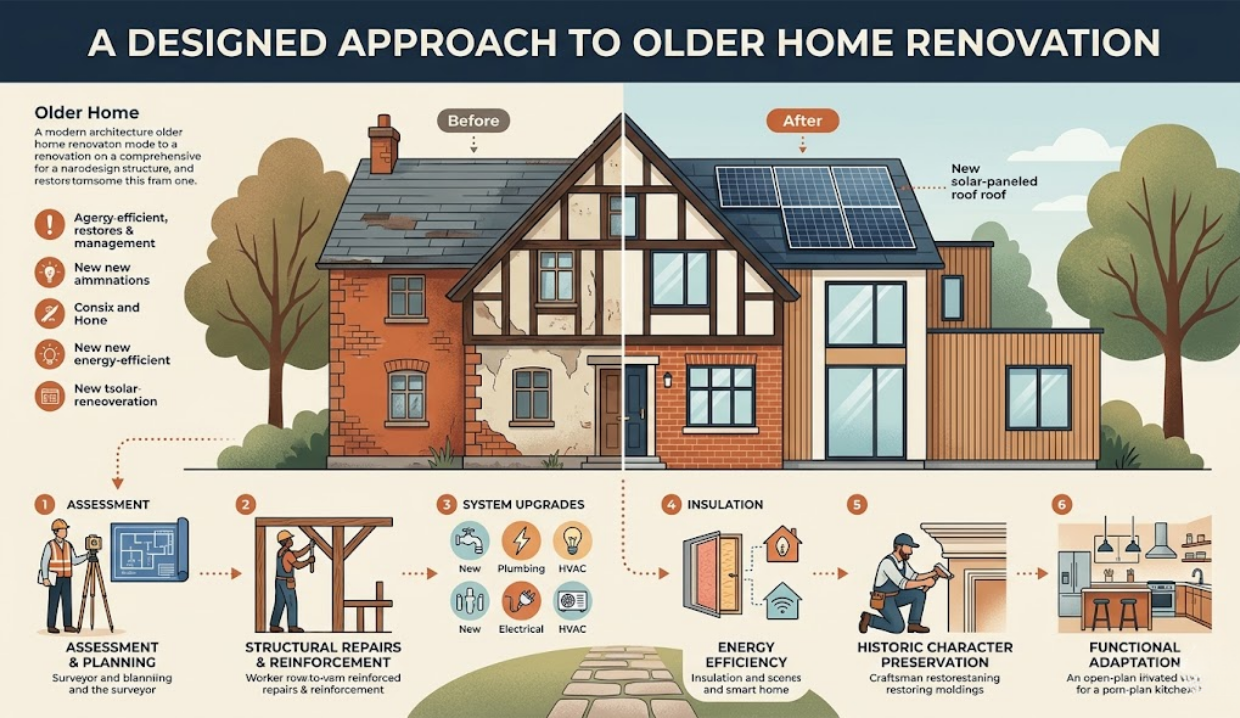
1. Initial Structural Assessment
- Foundation stabilization check
- Load-bearing wall assessment
- Building pathology inspection
2. Moisture and Ventilation Analysis
Older homes often struggle with damp.
Key considerations:
- Capillary moisture behavior in walls
- Damp proof course (DPC) condition
- Smart humidity control systems
3. Planning a Phased Renovation
Phased renovation planning reduces risk and cost spikes.
Typical phases:
- Structural repairs
- Envelope improvements
- Systems upgrade (plumbing, electrical)
- Interior finishes
Best Materials and Techniques for Old Homes
Choosing the right materials is critical.
Breathable Materials vs Modern Materials
| Feature | Traditional Materials | Modern Materials |
|---|---|---|
| Moisture handling | Vapor permeability | Often sealed |
| Flexibility | High | Low |
| Compatibility | Ideal for old homes | Risk of damage |
Use:
- Lime plaster instead of cement
- Timber repairs instead of replacements
- Eco-friendly alternatives to cement
Non-Invasive Renovation Techniques
- Reversible renovation techniques
- Invisible insulation solutions
- Floor leveling without structural damage
These preserve the original fabric while improving usability.
Energy Efficiency Without Damage
Improving energy performance in older homes requires a careful balance.
Insulation for Solid Walls
- Internal insulation systems
- Hybrid insulation systems
- Avoid blocking vapor permeability
Window Restoration vs Replacement
Restoring original windows often performs better than replacing them when paired with:
- Secondary glazing
- Draught-proofing
Heating System Retrofits
Options include:
- Underfloor heating retrofit
- Low-temperature heating systems
- Passive house retrofit strategies
Preserving Character While Modernizing
A major goal is sympathetic renovation design—upgrading without erasing history.
Maintaining Original Features
- Restore original woodwork
- Preserve moldings and joinery
- Retain flooring where possible
Sympathetic Design Upgrades
- Blend modern layouts with original architecture
- Use traditional joinery techniques
- Avoid over-modernization
Hidden Risks Most Homeowners Miss
Many renovation failures come from overlooked issues.
Moisture Traps and Damp Issues
Using non-breathable materials can trap moisture inside walls, leading to mold and decay.
Structural Movement and Cracks
Older buildings move. Ignoring this leads to:
- Cracking finishes
- Structural stress
Hazardous Materials
Watch for:
- Asbestos
- Lead paint
- Mold
Cost, Timeline, and Planning Strategy
Renovating older homes is rarely predictable.
Budget Allocation by Phase
- 20–30% for structural work
- 20% for envelope upgrades
- 30% for systems
- Remaining for finishes
Long-Term ROI
While costs may be higher, benefits include:
- Increased property value
- Lower energy bills
- Extended building lifespan
Common Mistakes to Avoid
- Using incompatible materials like cement in breathable walls
- Ignoring ventilation needs
- Skipping structural assessments
- Over-insulating without moisture planning
- Replacing instead of restoring original features
FAQS: Is There Any Specific Approach Designed for Renovating Older Homes
What is the best approach for renovating older homes?
The best approach combines fabric-first retrofit, conservation-led restoration, and phased planning. This ensures structural safety, energy efficiency, and preservation of character.
Should you restore or remodel an old house?
It depends on the condition. Restoration preserves original features, while remodeling changes the layout. Most projects require a balance of both.
Can you insulate old houses without damaging walls?
Yes, using breathable insulation materials and maintaining vapor permeability prevents moisture buildup.
How do you modernize an old house without losing character?
Focus on non-invasive techniques, restore original elements, and use sympathetic design upgrades.
Is it cheaper to renovate or rebuild an old house?
Renovation can be more cost-effective long-term if the structure is sound, especially when factoring in heritage value and sustainability.
Final Checklist for Renovating Older Homes
Before starting, ensure you cover:
Pre-Renovation Audit
- Structural integrity
- Moisture analysis
- Material compatibility
Execution and Monitoring
- Use reversible techniques
- Monitor structural movement
- Maintain ventilation balance
Post-Renovation Maintenance Strategy
- Regular inspections
- Moisture control
- Preserve original materials
Conclusion: The Right Approach Makes All the Difference
So, is there any specific approach designed for renovating older homes? Absolutely—but it’s not a one-size-fits-all solution.
The most effective strategy blends:
- Fabric-first thinking
- Conservation principles
- Modern performance upgrades
When done right, you don’t just renovate an old house—you extend its life, improve its performance, and preserve its story.
The key is simple: respect the past, upgrade for the future, and never compromise the building’s natural behavior.