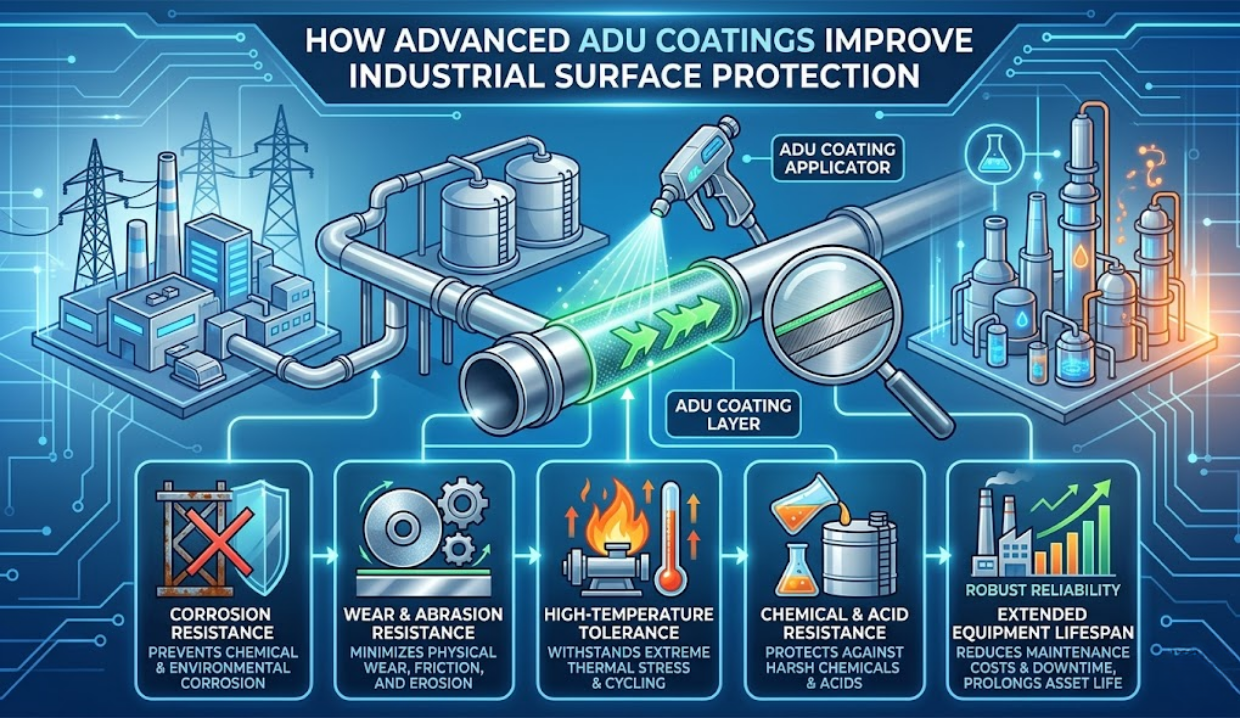
Industrial surfaces face constant pressure from chemicals, moisture, abrasion, heat, and mechanical stress. Without proper protection, concrete and steel structures degrade quickly, leading to costly repairs and safety risks. This is where ADU coatings and advanced industrial coating systems play a critical role.
ADU coatings refer to a category of high-performance protective coating systems used to enhance durability, resist corrosion, and extend the lifespan of industrial surfaces. These systems are widely applied in factories, warehouses, marine environments, and infrastructure projects where standard paint is not enough.
In this guide, you’ll learn how these coatings work, what types exist, how they are applied, and what makes them essential for modern industrial environments.
What Are ADU Coatings?
ADU coatings are advanced protective surface systems designed to shield substrates like concrete and steel from environmental and chemical damage. They are engineered using high-performance resins that create a strong, seamless barrier once cured.
In simple terms, ADU coatings act like a “protective skin” over industrial surfaces. Instead of allowing moisture, chemicals, or abrasion to directly affect the base material, the coating absorbs and resists the impact.
These systems are commonly used in:
- Industrial flooring solutions
- Chemical processing plants
- Warehouses and logistics hubs
- Marine and offshore structures
- Heavy-duty maintenance facilities
The main goal is not just surface protection, but long-term structural preservation.
Why Industrial Coatings Matter
Industrial environments are far more demanding than residential or commercial spaces. Constant traffic, chemical exposure, and heavy equipment create conditions that quickly damage untreated surfaces.
Without proper protective coating systems, facilities often face:
- Cracking and surface erosion
- Corrosion in steel structures
- Moisture penetration in concrete
- Chemical burns and stains
- Reduced structural integrity
This is why industries rely on advanced systems like epoxy coating systems, polyurethane protective coating, and polyurea applications to maintain durability and safety.
Types of ADU Coating Systems
Different environments require different coating technologies. No single system works for every condition. Below are the most widely used industrial coating systems.
Epoxy Coating Systems
Epoxy coatings are one of the most widely used solutions in industrial flooring. They are known for:
- High adhesion strength
- Chemical resistance
- Smooth, durable finish
Epoxy forms a rigid surface layer ideal for warehouses, factories, and parking structures. However, it can become brittle under extreme thermal movement.
Polyurethane Protective Coating
Polyurethane coatings offer flexibility along with durability. They are commonly used where surfaces experience temperature fluctuations or UV exposure.
Key benefits:
- Excellent UV resistance
- Flexibility under stress
- Good abrasion resistance
This makes them suitable for outdoor structures and areas exposed to sunlight or mechanical wear.
Also read: Home Renovation Glencoe What Is Cost Permit Process Guide
Polyurea Coating Systems
Polyurea is a fast-curing, high-performance coating used in demanding industrial environments. It is often applied where downtime must be minimized.
Advantages include:
- Extremely fast curing time
- High impact resistance
- Superior waterproofing capabilities
Because of its flexibility and strength, polyurea is often used in waterproof membrane coatings and containment systems.
Hybrid Resin Coatings
Hybrid systems combine properties of epoxy and polyurethane coatings. These are designed for environments requiring both chemical resistance and flexibility.
Surface Preparation: The Foundation of Performance
Even the best coating system will fail without proper surface preparation. This stage determines how well the coating bonds to the substrate.
Common Preparation Methods
- Mechanical grinding or shot blasting
- Acid etching for concrete surfaces
- Oil and contaminant removal
- Moisture testing before application
Surface preparation improves substrate adhesion enhancement, ensuring coatings bond effectively rather than peel or delaminate.
A critical factor often ignored is surface profile roughness. The correct texture allows coatings to anchor properly, improving long-term durability.
How Coating Systems Bond to Surfaces
The effectiveness of industrial coatings depends on chemical and mechanical bonding.
- Mechanical bonding: Coating grips into surface texture
- Chemical bonding: Resin reacts with substrate molecules
- Crosslinking: Polymer chains form a strong network during curing
This is where concepts like polymer crosslinking and surface adhesion become important. Strong bonding reduces risks such as peeling, bubbling, and coating failure.
Key Performance Factors of ADU Coatings
Several technical factors determine how long a coating system will last in real-world conditions.
1. Chemical Resistance
Industrial coatings must withstand acids, solvents, oils, and cleaning agents. Chemical resistant coatings are essential in manufacturing and processing plants.
2. Abrasion Resistance
Heavy machinery and foot traffic can wear down surfaces. Abrasion resistant coatings protect floors from constant friction damage.
3. Moisture Protection
Moisture vapor transmission is a major challenge in concrete. Moisture barrier coating systems prevent water from penetrating and weakening the structure.
4. Thermal Stability
Temperature fluctuations cause expansion and contraction. Coatings must handle thermal expansion without cracking or losing adhesion.
5. Thickness Control
Coating film thickness directly affects durability. Too thin leads to weak protection; too thick may cause curing issues.
Application Methods for Industrial Coatings
Different environments require different application techniques.
Spray Application
Used for large surfaces and fast coverage. Common in polyurea coating systems.
Roller Application
Suitable for epoxy floors and medium-scale projects.
Trowel Application
Used for thick industrial flooring systems requiring leveling and structural strength.
Each method affects coating consistency, curing process, and final performance.
Curing Process and Why It Matters
Curing is the chemical reaction that transforms liquid resin into a solid protective layer. Without proper curing, coatings fail prematurely.
Factors affecting curing:
- Temperature
- Humidity
- Airflow
- Material composition
Improper curing can lead to defects like amine blush in epoxy systems or surface tackiness.
Common Coating Failures and Their Causes
Even high-quality systems can fail if conditions are not properly managed.
Delamination
Occurs when adhesion fails due to poor surface preparation or contamination.
Blistering
Caused by trapped moisture or air beneath the coating layer.
Pinholes
Small surface voids caused by air bubbles or improper mixing.
Chemical Breakdown
Occurs in environments with aggressive solvents or acids exceeding coating tolerance.
Understanding these issues helps improve long-term coating performance and maintenance planning.
Maintenance and Repair of Coating Systems
Industrial coatings are not “apply and forget” systems. They require inspection and maintenance.
Maintenance Practices:
- Regular surface cleaning
- Inspection for cracks or wear
- Timely recoating
- Localized repair of damaged areas
Recoating within the correct recoat window ensures strong bonding between layers and extends lifespan significantly.
Standards and Compliance in Industrial Coatings
Global industries follow strict standards to ensure coating quality and safety.
Key standards include:
- ASTM coating standards for performance testing
- ISO 12944 corrosion protection classification
- Industry-specific chemical resistance benchmarks
These standards define how coatings should perform under controlled and real-world conditions.
Choosing the Right ADU Coating System
Selecting the right system depends on environmental conditions and performance requirements.
Consider the following:
- Exposure to chemicals or solvents
- Temperature variations
- Mechanical load and traffic levels
- Moisture exposure
- Expected lifespan of the structure
For example:
- Epoxy is ideal for indoor industrial flooring
- Polyurethane works better outdoors
- Polyurea is best for fast-curing waterproof systems
A proper selection ensures cost efficiency and long-term durability.
Real-World Applications of ADU Coatings
These systems are used across multiple industries:
- Manufacturing plants
- Food processing facilities
- Automotive workshops
- Marine docks and ships
- Power generation facilities
- Chemical storage areas
Each environment requires a tailored coating solution based on stress factors and operational demands.
Key Takeaways
ADU coatings are not just surface finishes—they are engineered protection systems designed for demanding industrial conditions. Their effectiveness depends on proper selection, surface preparation, application method, and curing control.
When applied correctly, they significantly improve:
- Structural lifespan
- Safety standards
- Maintenance efficiency
- Operational reliability
Understanding the science behind industrial coating systems helps ensure better decisions and longer-lasting infrastructure performance.
FAQS: ADU coatings
What are ADU coatings used for?
They are used to protect industrial surfaces like concrete and steel from corrosion, chemicals, moisture, and abrasion.
How long do industrial coatings last?
Depending on conditions and maintenance, they can last anywhere from 5 to 20 years.
Which coating is best for chemical resistance?
Epoxy coating systems generally offer strong chemical resistance, especially in controlled environments.
Why do coatings fail?
Most failures occur due to poor surface preparation, moisture issues, or incorrect application techniques.
Can coatings be applied in humid conditions?
Some systems, like polyurea, perform well in high humidity, but most coatings require controlled environments for best results.