Replacing a roof is one of the biggest home expenses most homeowners will ever face. In a city like Pasadena, where older homes, strict building codes, and climate conditions all play a role, the price can vary more than people expect.
If you are trying to understand roof replacement cost Pasadena, the real challenge is not just finding an average number—it’s understanding what actually drives that cost, what hidden fees appear, and how different materials completely change your final bill.
This guide breaks everything down in a clear, practical way so you can estimate your project with confidence.
Average Roof Replacement Cost in Pasadena
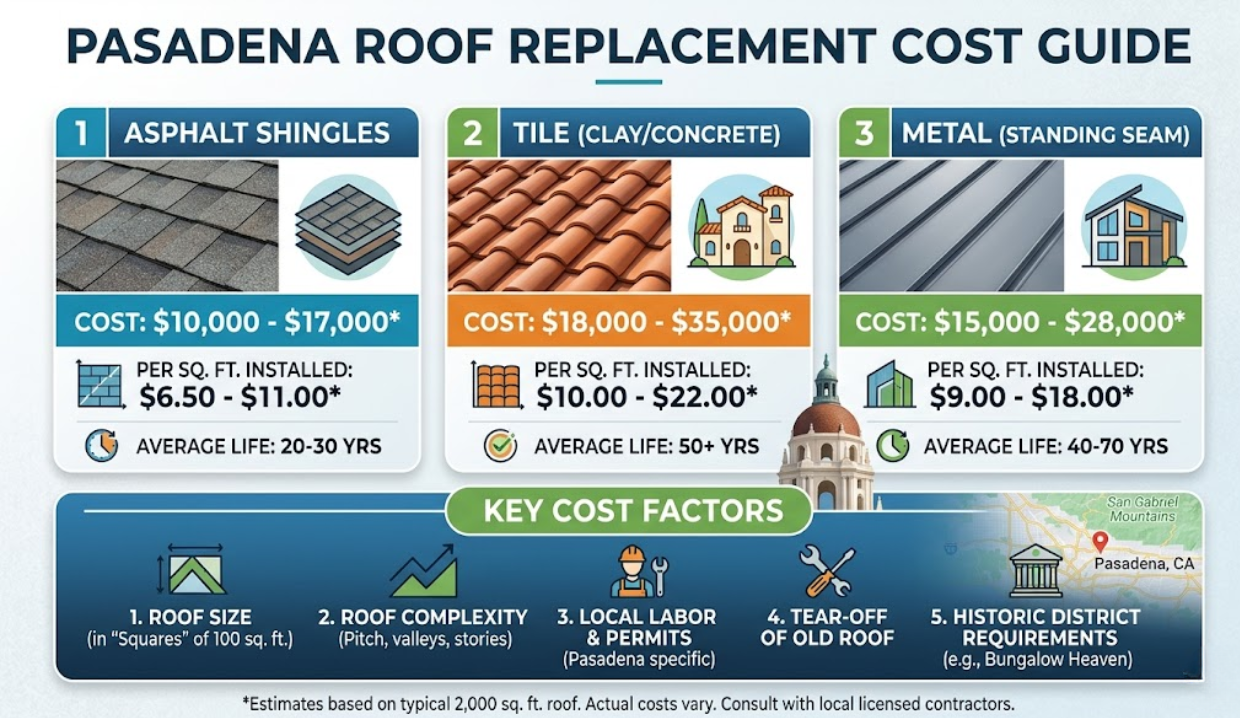
In most cases, the average roof replacement price Pasadena homeowners pay falls within a wide range depending on materials, roof size, and condition.
A general breakdown looks like this:
- Basic asphalt shingle roof: lower range
- Mid-tier architectural shingles: mid-range
- Tile or metal roofing systems: higher range
For most residential properties, the cost per roofing square (100 sq ft) is the most important metric contractors use when building estimates.
A standard estimate typically includes:
- Tear-off of old roofing layers
- New underlayment installation
- Roofing materials
- Labor
- Disposal fees
- Basic permit costs in Pasadena
What surprises most homeowners is that labor and structural repairs often make up nearly half the total bill.
What Impacts Roof Replacement Pricing
No two roofs cost the same. Even two identical houses on the same street can have different prices due to hidden variables.
Roof size and complexity
Larger roofs obviously cost more, but pitch (steepness) is just as important. Steeper roofs require more labor, safety equipment, and time.
Material selection
This is the biggest cost driver:
- Asphalt shingles (most affordable)
- Clay or concrete tile (common in Pasadena architecture)
- Metal roofing (longer lifespan but higher upfront cost)
Labor and contractor rates
Southern California has higher labor costs compared to many regions. Roofing contractors charge based on:
- Crew size
- Job complexity
- Safety requirements
- Scheduling urgency
Permit and inspection fees
In Pasadena, permits are required for full replacements. These add predictable but unavoidable costs.
Hidden structural issues
Once old roofing is removed, problems may appear:
- Rotten decking
- Water damage
- Rafter reinforcement needs
These are not visible in initial estimates but significantly affect final pricing.
Roof Material Cost Comparison
Choosing the right material is the most important decision in controlling your total investment.
Also read: Residential roof replacement contractor lake forest best roof
Asphalt shingles
The most common option in residential roofing.
Pros:
- Lower cost
- Easy installation
- Wide availability
Cons:
- Shorter lifespan
- Less resistant to extreme heat
Tile roofing
Very common in Pasadena due to the architectural style.
Pros:
- Long lifespan
- Excellent heat resistance
- Premium appearance
Cons:
- Heavy material
- Higher labor cost
- Expensive repairs
Metal roofing
Increasingly popular for energy efficiency.
Pros:
- Reflects heat
- Long durability
- Low maintenance
Cons:
- High upfront cost
- Specialized installation
Quick comparison table
| Material | Cost Level | Lifespan | Maintenance |
|---|---|---|---|
| Asphalt shingles | Low | 15–30 years | Medium |
| Tile roofing | High | 40–70 years | Low |
| Metal roofing | High | 40–60 years | Low |
Hidden Costs Homeowners Don’t Expect
Many homeowners only budget for visible costs. In reality, several “hidden” factors can add thousands.
Wood rot and structural repairs
Once shingles are removed, damaged decking is often discovered. This is one of the most common unexpected expenses.
Tear-off and disposal fees
Old roofing must be removed and hauled away. Disposal fees in California are higher due to environmental regulations.
Code upgrades
Homes may need upgrades to meet current building standards, especially older properties.
Permit delays
Delays in approvals can increase labor scheduling costs.
Roof pitch adjustments
Steep roofs increase safety requirements, which raises labor costs.
Insurance and Financing Options
Roof replacement can sometimes be partially covered by insurance, but only under specific conditions.
When insurance covers roofing
Insurance typically applies when damage is caused by:
- Storms
- Falling debris
- Sudden unexpected events
Normal wear and aging are usually not covered.
Depreciation issues
Insurance may not pay full replacement value. Many policies apply depreciation, creating a gap between claim payout and actual cost.
Financing options
Homeowners often use:
- Home improvement loans
- Contractor financing plans
- HELOC (home equity line of credit)
These help spread payments over time instead of paying up front.
Repair vs Replacement Decision Guide
Not every roof needs a full replacement.
Choose repair if:
- Damage is localized
- The roof is under 10–15 years old
- No structural issues exist
Choose full replacement if:
- Multiple leaks are present
- The roof is near the end of its lifespan
- Shingles are curling or missing widely
- Decking is damaged
A full replacement is often more cost-effective long-term than repeated repairs.
Pasadena Roofing Market Insights
The roofing market in Pasadena is influenced by climate, architecture, and demand.
Seasonal pricing trends
- Spring and summer: higher demand, higher pricing
- Winter: slightly lower contractor rates
Contractor availability
Skilled roofing crews are often booked weeks in advance, affecting pricing flexibility.
Material demand
Tile roofing remains popular due to local architectural standards, influencing cost trends.
How to Reduce Roof Replacement Cost
Even though roofing is expensive, smart planning can reduce total expenses significantly.
Get multiple estimates
Never rely on a single contractor quote. Pricing can vary widely.
Choose material wisely
Not every home needs premium tile or metal roofing.
Schedule off-peak season
Lower demand periods often lead to better pricing.
Combine upgrades
If possible, bundle roofing with:
- Gutter replacement
- Insulation upgrades
- Ventilation improvements
This can reduce labor duplication.
Watch for unnecessary upselling
Some contractors may recommend upgrades that are not structurally necessary.
Example Cost Breakdown (Realistic Scenario)
Here’s what a typical Pasadena home might look like:
- Roof size: 2,000 sq ft
- Material: architectural shingles
- Condition: moderate wear
Estimated breakdown:
- Tear-off: included in base cost
- Shingles + underlayment: major portion
- Labor: a significant portion
- Permits: minor fixed cost
- Disposal: moderate
If structural issues are found, additional repair costs may apply.
This is why final invoices often exceed initial estimates.
FAQS: roof replacement cost Pasadena
What is the average roof replacement cost in Pasadena?
It depends on material and size, but most homes fall within a wide mid-to-high range due to labor and material costs in California.
How long does roof replacement take?
Most residential roofs take 2–5 days, depending on complexity and weather conditions.
Is tile roofing worth it in Pasadena?
Yes, in many cases. It lasts longer and suits the climate, but upfront cost is significantly higher.
Do I need a permit to replace my roof?
Yes. Permits are required in Pasadena for full roof replacements.
Can roof replacement increase home value?
Yes, a new roof improves resale value, energy efficiency, and buyer confidence.
Final Thoughts
Understanding roof replacement cost Pasadena is not just about getting a number—it’s about understanding the full system behind it.
Material choice, labor structure, hidden repairs, and local regulations all combine to shape the final price. Once you understand these factors, you can make smarter decisions, avoid unnecessary expenses, and plan your project with far more confidence.
A roof is not just a repair—it’s a long-term investment in safety, efficiency, and property value.