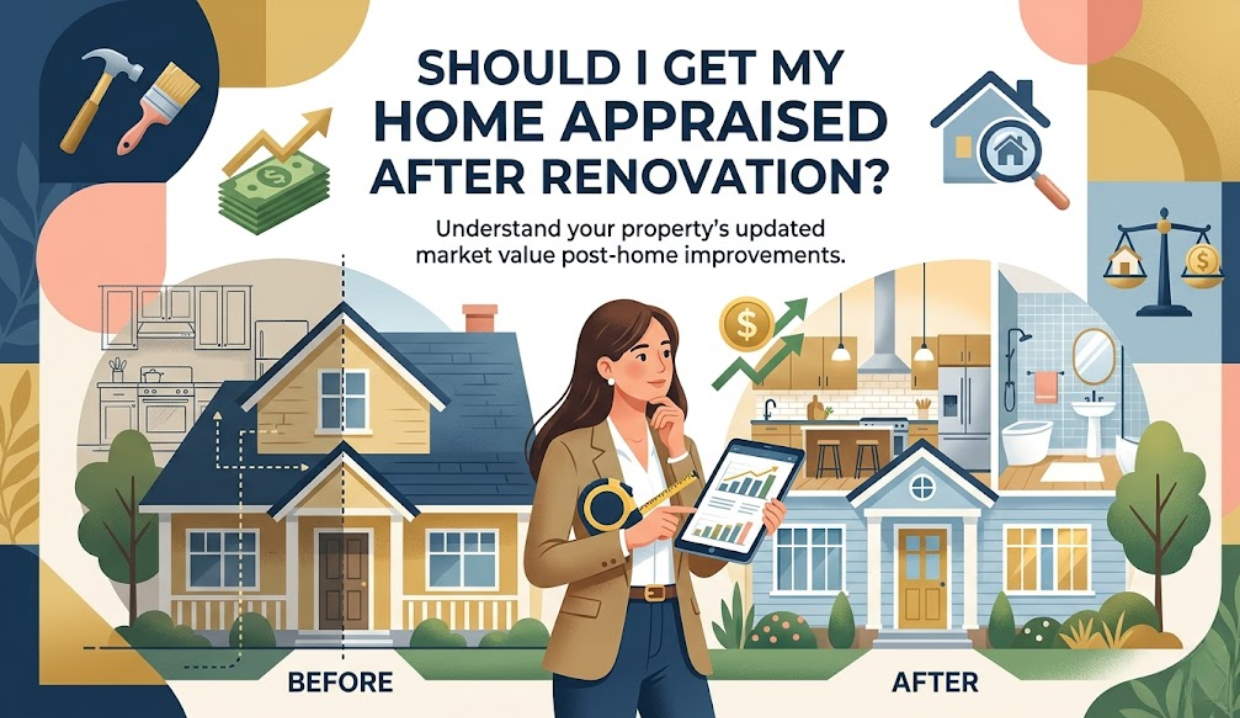
Renovating a home is exciting, but it also raises an important question that many homeowners overlook until the end: Should I get my home appraised after renovation?
The answer depends on your goal—selling, refinancing, or simply understanding your updated property value. A renovation can significantly change your home’s worth, but not always in the way you expect. Some upgrades boost value immediately, while others improve comfort without affecting the market price much.
This guide breaks everything down in a clear, practical way so you can make the right decision with confidence.
What a Post-Renovation Appraisal Actually Means
A post-renovation appraisal is a professional valuation of your property after upgrades or remodeling work has been completed.
In simple terms:
A real estate appraisal report is an unbiased estimate of your home’s current market value, based on location, condition, size, and comparable sales—not just renovation costs.
After renovations, the appraiser reassesses your home using updated conditions, often applying the sales comparison approach, where your property is compared with similar recently sold homes.
This process helps determine the appraised value after renovation increase, if any, and ensures your home’s value reflects current market realities.
Why Homeowners Consider an Appraisal After Renovation
Most homeowners think renovations automatically increase value. That’s not always true. A post-renovation appraisal helps you understand the real financial impact.
Common reasons include:
- Preparing to sell the property
- Refinancing a mortgage
- Applying for a home equity loan
- Checking return on renovation investment
- Understanding updated market position
The key benefit is clarity. Instead of guessing, you get a data-backed property value reassessment after renovation based on real market conditions.
How Appraisers Evaluate Renovated Homes
Appraisers don’t simply add up renovation costs. Instead, they evaluate how your home compares to similar properties in your area.
Sales Comparison Approach Explained
This is the most common method used in residential valuation.
Appraisers look at:
- Recently sold homes nearby
- Similar size and layout
- Condition and age
- Upgrades and features
They then adjust your home’s value based on differences.
For example:
- A renovated kitchen may add value compared to a home with an outdated kitchen.
- A finished basement might increase value if similar homes lack one.
What Appraisers Actually Inspect
During an appraiser inspection after renovation, they focus on:
- Overall quality of work
- Structural changes
- Functional layout improvements
- Permits and compliance
- Material quality (not just appearance)
They also verify whether improvements are permanent or cosmetic.
Also read: Home Renovations Mount Pleasant What Costs Permits And Tips You Need
Which Renovations Increase Appraisal Value the Most
Not all renovations are equal. Some provide strong returns, while others have limited impact on valuation.
High-Value Upgrades
- Kitchen remodeling (modern layout, quality finishes)
- Bathroom upgrades (fixtures, plumbing improvements)
- Additional living space (room additions, basement finishing)
- Energy-efficient improvements (insulation, windows, HVAC)
- Roof replacement in poor-condition homes
These upgrades improve both usability and market appeal, directly affecting home market value recalculation.
Low-Impact Renovations
- Luxury finishes in average neighborhoods
- Over-customized designs
- Pure cosmetic upgrades without functional improvement
This is where cost vs value remodeling appraisal becomes important. Spending more does not guarantee higher appraisal value.
Timing: When Should You Get a Home Appraised After Renovation?
Timing plays a major role in accuracy.
You should consider an appraisal when:
- Renovation is fully completed
- All permits are closed
- Final inspections are approved
- The property is ready for listing or refinancing
Waiting too long can sometimes lead to outdated comparisons, especially in fast-moving markets.
In general, most experts recommend scheduling a post-renovation home appraisal within a few weeks of completion.
Understanding the Gap Between Cost and Appraised Value
One of the most misunderstood parts of real estate is that renovation cost does not equal value increase.
This is where cost approach valuation method and market-based methods differ.
Here’s why gaps happen:
- Market conditions limit price increases
- Neighborhood price ceilings restrict value growth
- Buyers don’t always pay for premium upgrades
- Over-renovation reduces ROI
This is often referred to as the renovation overcapitalization risk appraisal impact, where spending more doesn’t translate into higher valuation.
Common Mistakes That Reduce Appraisal Value
Many homeowners unknowingly reduce their home’s appraisal outcome.
Over-Renovating for the Neighborhood
If your home becomes significantly more expensive than nearby properties, the value will be capped by local comparables.
Missing Documentation
No permits or invoices can negatively affect trust in improvements.
Ignoring Functional Layout
Appraisers prioritize usability over aesthetics. A beautiful but impractical layout may not increase value significantly.
Poor Comparable Selection
Even strong renovations lose impact if similar homes sell at lower prices nearby.
How Appraisers Handle Renovation Documentation
Documentation plays a silent but powerful role in valuation.
Useful documents include:
- Contractor invoices
- Building permits
- Before-and-after photos
- Inspection approvals
These help verify improvements and ensure they are included in the final valuation.
This is especially important for avoiding an undocumented renovation penalty in appraisal situations.
Should I Get My Home Appraised After Renovation for Refinancing?
Yes, especially if your goal is financial leverage.
A refinance appraisal helps determine:
- Updated home equity
- Loan eligibility
- New interest terms
If your renovation significantly increased value, you may unlock better lending options through a mortgage refinancing appraisal.
What If the Appraisal Is Lower Than Expected?
This happens more often than people think.
Possible reasons:
- Market slowdown
- Weak comparable sales
- Over-improvement relative to neighborhood
- Cosmetic upgrades over structural value
Options include:
- Requesting a second appraisal review
- Providing additional comparable properties
- Challenging errors in valuation data
Understanding the appraisal gap after renovation is essential to avoid frustration.
How to Prepare for a Post-Renovation Appraisal
Preparation can influence accuracy and smooth evaluation.
Step-by-Step Process
- Complete all renovation work fully
- Gather all permits and invoices
- Document upgrades clearly
- Clean and present the home properly
- Highlight major improvements during inspection
Appraisers do not assign emotional value, but clear documentation ensures nothing is missed.
Invisible Factors That Influence Appraisal Value
Some improvements don’t stand out visually but still affect value.
These include:
- Plumbing system upgrades
- Electrical rewiring
- Foundation repairs
- Energy efficiency improvements
These are often referred to as hidden renovation value drivers because they improve safety and longevity.
Tax Assessment vs Appraisal After Renovation
Many homeowners confuse tax value with market value.
- Tax assessment: Used for property taxes
- Appraisal value: Based on real market conditions
Renovations may increase both, but not equally. A tax authority may update value slower than a real estate appraiser.
Key Takeaways
A post-renovation appraisal is not just a formality—it’s a financial checkpoint.
You should consider it if you want to:
- Sell at the right price
- Refinance strategically
- Understand true ROI
- Avoid overestimating renovation returns
But it’s also important to remember:
Renovations improve value only when they align with market demand, neighborhood standards, and functional improvements—not just cost.
FAQS: Should I get my home appraised after renovation
Should I get my home appraised after renovation immediately?
Yes, once all work is complete and permits are finalized. This ensures the valuation reflects the true upgraded condition.
Do renovations always increase appraisal value?
No. Only market-relevant upgrades influence appraisal outcomes. Cosmetic or over-customized changes may have a limited impact.
Can I increase appraisal value significantly with remodeling?
Yes, but only if upgrades align with local market expectations and comparable properties.
What happens if the appraisal is lower than the renovation cost?
You may face a value gap. Options include refinancing adjustments, appealing the appraisal, or waiting for market improvement.